Instructional Design Document
IDD
by Eva Egensteiner

Visual Storytelling for Civic Engagement
a mini-course
Overview
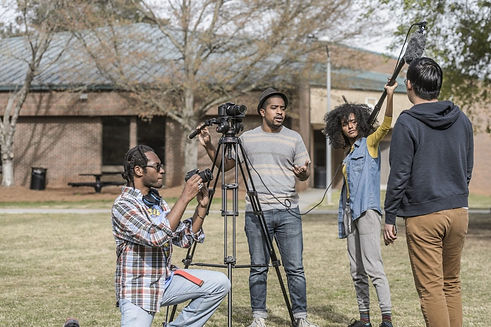
This mini-course is titled, Visual Storytelling for Civic Engagement, and serves as an introduction to the use of imagery and spoken word to tell a compelling and accurate story. The goal is to establish a foundation for learners to then move on to a more extensive visual production course that will focus on issues related to human rights.
This minicourse will include all of the following components:
scaffolding, individual and group assignments, peer feedback, digital technology, artificial intelligence, and role-playing.
The minicourse needs to train students in the basics of smartphone documentary film or photography techniques and how to research, plan, and produce a short micro-project.
This smaller assignment will establish the foundation for the students to then engage in a more extensive semester-long documentary-style project on a human rights-related topic in their communities. Success of the project relies on the technical and social skills they will learn in the minicourse, which will touch on teamwork, storytelling, technical skills and research.
Knowledge Gap
I have taught a video production course on the college level and found that the students lacked a basic understanding of the technical and narrative skills required to produce a final project. They needed stronger support and guidance in researching their subject matter, as well as navigating group dynamics and teamwork. The technical quality of their projects suffered and the collaborative workflow was compromised.


Target Audience
This learner profile is a general or comprehensive description of the learners who will engage with the instructional materials.
For this assignment I will include a description of the demographics, background or prior knowledge, skills and dispositions, and other useful information.
Demographics: undergraduate students from several higher education institutions
Background or Prior Knowledge: They will have already participated in a global online class, but their subject matter level and grade will vary.
Dispositions: a desire to learning with an international group of students.
A full list of considerations for the learner profile include:
-
Demographic Information
-
Learning Objectives and Goals
-
Prior Knowledge and Experiences
-
Learning Styles and Preferences
-
Motivations and Challenges
-
Technology Proficiency
-
Accessibility and Inclusivity
-
Feedback and Iteration
Course Type
There will be a required update of technical skills as well as some topical research and storytelling skills that need to be learned in order to rmeet the learning objective.
I am deciding whether this will be a How-To Course that provides instruction to learners on practical skills or tasks, or a Step-by-Step Course that is Ideal for guiding learners through a sequential process or procedure.
Course Modality
This mini-course will be a Hybrid/Blended design that combines both online and in-person elements for a balanced learning experience. Because I will use pre-produced mini-training videos, a few hours of the course need to be done online. Planning, idea pitching, screening and discussions will need to take place in person.

Course Learning Outcomes
-
Use the newly acquired technical and storytelling skills to produce a short documentary with integrity, curiosity, and open-mindedness. (This will be covered in Modules 1 , 2 & 3 )
-
Apply critical thinking and analytical skills to better understand a civic engagement topic or issue, and identify its impact and connectedness across geographies. (This will be covered in Module 1)
-
Develop the ability to collaborate effectively with others to deliver a final project. (This will be covered in Modules 1 & 2 )
-
Recognize your ability (self-efficacy) to inform others, effect change and become civically engaged through filmmaking. (This will be covered in Modules 1 & 2 )
-
Better understand your learning process: what you excelled at, struggled with, enjoyed most, and how you managed these experiences. Recognize your areas of strength and weakness and how to support and build up these areas. (This will be covered in Module 3 )
Learning Objectives
in Module 1
-
Learn about the range of approaches and applications of documentary film and plan a storytelling project. (aligns with Learning Outcomes 1 & 2 )
-
Recognize the value of understanding the topics documented in your international peers’ films and how they impact their communities. (aligns with Learning Outcome 2 )
-
Collaborate with your classmates responsibly and respectfully in all stages of the production process. (aligns with Learning Outcome 3 )
-
Develop and apply technical and storytelling skills. (aligns with Learning Outcome 4 )


Learning Activities
for Module 1
-
Lectures and Presentations: Screen several student-produced projects and professionally produced projects that model the variety of films with civic engagement intentions. (aligns with Learning Objective 1)
-
Pre-produced Tutorial videos: Introduce this series of videos posted to the LMS and reinforce some of the key aspects through class demonstrations and discussions. This will provide the students with a "big picture" of what the final module in this course will involve. (aligns with Learning Objective 1)
-
Discussions and Debates: Use the first activity to lead into discussions and debates about the strengths, weaknesses and intended outcomes of the technical, storytelling and subject-matter aspects of each production. The instructor is prepared to point this out as well by selecting films for this purpose. (aligns with Learning Objective 1)
-
Screen Explainer Video: This will be created using the AI Video Generation software, InVideo, to demonstration what the expections are for the students to complete Activities 5 and 6.
-
Students Collaborate: Students pair up and identify a social issue topic of interest. They prepare a working document to outline their projects' core components (topic, problem, solution, interviewees, and supporting footage or broll). This can be done using Padlet between students who are collaborating in person or online. (aligns with Learning Objective 3)
-
Hands-On Activity: The Student pairs (from #4) will not be using video for this assignment but will instead take photographs, write up text and make audio recordings that contribute to their storytelling on their selected topic. They will compile these into a slideshow and become the framework for a pitch of a longer final project for the course. This exercise demonstrates their developing skills in storytelling. (aligns with Learning Objective 4)
.
Assessment Strategies
for Module 1
-
Discussion Forums: This formative assessment includes a discussion about the documentary film examples screened for the students in Activity 1. This allows students to articulate their opinions and demonstrate their critical thinking skills. (aligns with Activities 1-3)
-
Interactive Activities: Activity #5 requires students to collaborate on a project together. This will demonstrate their ability to work together and identify points where improvements are needed, such as communication, listening, understanding, and open-mindedness. (aligns with Activity 5)
-
Interactive Activities: The Hands-On Activity #6 will serve as an assessment of the students' application of the knowledge they acquired and determine their level of understanding of the required components of storytelling. This will indicate how prepared they are to apply these skills and knowledge to the bigger project, which is essentially a real-world application. (aligns with Activity 6)
-
Peer Evaluations: This formative assessment will take place at the end of Module 1 and involve students' providing feedback on their peers' storytelling project slideshow. They will assess whether the storytelling components were comprehensive, relevant and engaging. (aligns with Activity 6)
-
Actionable Feedback: This involves the instructor working directly with the students to ensure that they have applied earlier feedback to inform their project and ensure that they are building on their learning. (aligns with Activities 1-6)


Instructional
Design Model
The Successive Approximation Model (SAM) is preferable over other models for my mini-course for reasons I will outline now. I was trained in CPBR, or commnity-participatory based research, which invovles stakeholders and participants (leaners) from the beginning stage. This approach is more intuitve to me and usually results in better, more appropriate outcomes. I have also learned the value of incorporating feedback throughout a project. There is no wrong time to make changes to improve components that will ultimately delivery a better learning experience. I also appreciate that there are only 3 phases, even though each phase includes several steps. There is the option to revert to a more streamlined SAM 1 model is SAM 2 becomes too time-demanding.
Additionally, SAM is adept at being responsive to changing curriculum requirements, which can be a reality in some circumstances. The prototyping and continual evaluation should support more up-to-date and effective learning experiences.
Other factors to consider include: Learning Objectives, Content Complexity, Learner Profile, Available Resources, Technological Requirement and Evaluation and Feedback.

Learning Theory Connections
The 3 C's
This minicourse will include the following learning objectives:
-
Understand the function of visual communication in society.
-
Understand the impact of technology on the expression of visual information.
-
Identify the elements of the subjective and active nature of observation.
I am particularly interested in using the Project-based Learning and Experiential Learning models in this course. They are very suitable to the objectives of the course that require hands-on learning and the completion of a project. The students will learn by doing and the minicourse will establish a competency to prepare them for the full semester course project.
Cognitivism
This minicourse can draw a bit from the work of all four of the cognitive theorists we covered in Week 3. Piaget's theory of cognitive development emphasizes the importance of matching instructional materials and activities to a learner's current cognitive stage points to the students' knowledge gap that inspired me to select this topic for a minicourse. As explained above, the students in my course were not prepared for the large final project and needed to be supported at their current stage before progressing. Providing them with a shorter practise exercise where they can enter at any stage of knowledge can lead to better success with the larger projects.
Vygotsky's Zone of Proximal Development (ZPD), which emphasized learners's need for support from more knowledgeable individuals to manage cognitive load effectively is also relevant in a more obvious way. The instructor will need to recognize which level the students are at and intervene accordingly to provide tailored instruction.
Of course, Bruner's concept of "scaffolding", stating that learning materials should be presented step-by-step and increase in complexity as the students' cognitive abilities grow is a very effective plan for teaching technical skills, such as the use of cameras, lights, microphones and editing software.
Lastly, Bandura's social cognitive theory on the notion of self-efficacy is a good reference for this minicourse since a major objective is for the students to believe that their abilities can lead to success and support more confident learning.
Constructivism
Several of the principles in this theory seem applicable to my minicourse. This includes the idea that students should be active participants in constructing their own knowledge and should be directly engaged in the learning process. This will be integrated in the assignment since they each have the freedom to choose the approach and subject matter of their project. The constructivist principle of encouraging students to reason, reflect, and justify their understanding can be addressed through student presentations and reflective writings. I would also like to consider implementing the 5E model using the stages: Engage, Explore, Explain, Extend, and Evaluate to guide students through an inquiry-based learning process. This will require more thought but will be addressed in the next course.
Connectivism
There are many aspects to connectivism that resonate with me and with this minicourse. Below are some concepts followed by ideas for learning activities.
1) Foster a collaborative and learner-centered approach to course design. I would ask students to submit a short list of their learning goals for the minicourse and have them reflect on this at the course's end.
2) Encourage learners to actively participate in discussions, share resources, and collaborate on projects. The students will use in class time, and online tools to comment on their peers' work and collaborate in project idea development.
3) Incorporating real-world problem-solving scenarios in instructional design aligns with the connectivist approach. The subject matter for this minicourse project addresses a human-rights related issue and sets up the students for a larger group project on the film that will address a real-world problem.
Part of the students' research will require them to conduct a good deal of research using social media and online communities in the learning process as they identify a topic of their projects. They will use X, Instagram and other discussion forums to expand their knowledge on the topic of choice. OER materials will also be used for research and as examples of similar projects. The instructor can compile a list of materials for the students to access to help them diversify their perspectives and develop critical thinking skills.


Subject Matter Expert
& Resources
-
Student-produced documentaries that were created in previous iterations of this course are available on a website. Watching these will help me identify where students typically need more support with their storytelling and technical skills.
-
Pre-produced Tutorial videos
-
Professional documentary filmmakers working in the industry who have experience teaching filmmaking can provide guidance on best practices.
-
Civic Engagement instructors at my college who can help inform the curricula on social action films.
-
Books:
-
Documentary Storytelling: Creative Nonfiction on Screen, by Sheila Curran Bernard - 202
-
Directing the Documentary, by Michael Rabiger, Courtney Hermann - 2020
Accessibility & UDL
Accessibility and UDL
Challenges that will need to be made to make this mini-course accessible and follow UDL guidelines:
-
update LMS, Brightspace, course site to meet accessibility standards
-
add closed captions to existing video materials
-
add visual descriptors to all images
-
check all pdfs to ensure accessibility
-
break materials down into smaller unit


Digital Media
& Storyboards
Examples of Civic Engagement Video Documentaries: Student-produced projects and professionally produced documentary film projects that model the variety of films with civic engagement intentions.
Pre-produced tutorial videos on: the storytelling concept; pre-production project planning, storyboarding and scripting; equipment use (camera, lighting microphone); interview framing and scene coverage; interviewing techniques; post-production editing, titles and credits.
Explainer Video outlining the steps required to complete the Hands On Activity in my Learning Activities section above. I will use InVideo to assist me with this AI Generated project.


Discussion & Assignment
Prompts

Discussion & Assignment
Rubrics
Review of
Learning Theories and ID Models


